


- Press Center

Phil Midland, President of Strategic Renaissance 21 (SR21), Visits TusHoldings to Discuss New Frontiers for Sino-US Future Tech CooperationPrint
Post Time:2026-01-15来源:TusHoldings
On January 14, Phil Midland, President of the Strategic Renaissance 21 (SR21), led a delegation to TusHoldings. He held an in-depth symposium with Wang Jiwu, Chairman of TusHoldings, and Zhang Youliang—Chairman of Beijing Hengkuan Low-Altitude Tech, Chairman of the Global AI & Low-Altitude Economy Development Association, and Chairman (Prep) of the "Two Bombs, One Satellite" Research Society. The discussions centered on key topics such as the "Low-Altitude Economy and Sino-US Tech Cooperation." This meeting marks the first formal exchange between the US-China Friendship Liaison Group following the 2025 "September 3rd Parade." Participants included Dr. Alex Williams, Executive Vice President of Technology at XTI Aerospace; Jeremy Schneiderman, CEO of Drone Nerds; TusHoldings executives Sai Fulin, Yang Ming, Wu Ziniu, and Luo Yin; as well as industry experts and leaders from Hengkuan International Group, the "Two Bombs, One Satellite" Research Society (Prep), and the School of Artificial Intelligence at Beihang University, including Zhang Mozi, Liu Bo, Wang Zheng, Zhou Shijie, and Cheng Jin.
President Phil Midland opened the meeting by reflecting on the 40-year history of Sino-US tech cooperation and his personal professional rapport with "old friends" in China, such as Generals Zhang Aiping and He Pengfei, dating back to his time as a military attaché and negotiator. He noted that President Xi Jinping, in a call with President Trump, specifically highlighted the contributions of the Flying Tigers in China and invited descendants of General Chennault to attend activities related to the "September 3rd Parade." Midland emphasized that in the era of AI and aerospace data explosion, both nations—particularly the scientific and technological communities—should look beyond competition to seek underlying coordination, cooperation, and sharing mechanisms, including rules, protocols, and standards. He described this as the "Yin and Yang" philosophy of balance. As a witness to history and an advisor to President Trump, Midland stated that his visit was dedicated to these objectives.
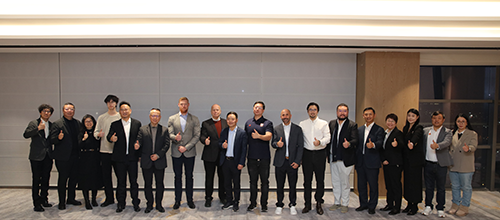
During the keynote session, both parties reached a consensus that "Common Security" is the prerequisite and cornerstone for tech cooperation between China, the US, and the global community. They advocated using a "Security-Trust" framework, informed by history, to dismantle current barriers in technological cooperation. Addressing mutual concerns in AI, aerospace-ground integration, the low-altitude economy, and digital rights, both sides exchanged constructive perspectives and solutions for global challenges. The meeting also established a long-term, regular Track II (non-governmental) meeting mechanism to study cooperation between the US and Chinese tech sectors and its global promotion, focusing specifically on AI and tech innovation infrastructure.
Chairman Wang Jiwu reviewed TusHoldings’ history of engagement with the US, including past lessons and successes. He specifically mentioned that a 2022 Foreign Affairs cover story defined TusHoldings as the world’s largest "Science and Tech Innovation Infrastructure Provider." Wang argued that by shifting from geopolitical thinking to a systems-oriented "Ecosystem Thinking" for humanity's future, TusHoldings can serve as a continuous win-win catalyst for Sino-US and global cooperation. He systematically outlined TusHoldings’ three core advantages, which received high praise from the US delegation. First, its Global Innovation Network operates over 300 innovation bases covering key nodes like Cambridge, Michigan, and Moscow to support resource linkage. Second, its Hard-Tech Batch Incubation utilizes an "Incubation + Investment" model that hatches over 10,000 startups annually and fosters 20+ unicorns a year, including recent Large Language Model (LLM) giants. Third, its Neutral Platform Positioning upholds a "Public Welfare + Market" philosophy that maintains neutrality even in conflict zones, providing a new option to resolve trust concerns in cooperation.
Chairman Zhang Youliang proposed a "3+1" Cooperation Roadmap, which met with an enthusiastic response from the US delegation. The roadmap outlines a short-term adoption of a "Sino-US + Third Party" framework to launch projects in the UAE, integrating Chinese drone hardware and services with US standards and market access alongside UAE policy and capital. In the medium term, the plan is to establish a "US-China AI Dialogue Mechanism" in Singapore or the UAE to jointly define AGI safety "Red Lines." For the long term, the objective is to provide continuous updates to both governments, aiming to deliver an "Enterprise-level" achievement package for the April 2026 US-China Summit. The US delegation responded by pledging to advance these initiatives efficiently.
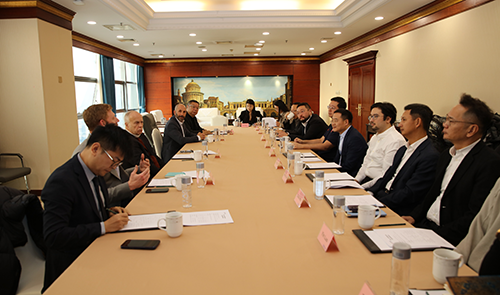
Furthermore, the meeting reached specific arrangements on key matters. At the technical level, drawing inspiration from the internet's TLS protocol, designated leads will complete a draft white paper on "Low-Altitude Data Blockchain + Trusted Execution Environment (TEE)" to ensure data export is "verifiable and controllable." On the industrial level, TusHoldings will mobilize over 10 subsidiary drone and anti-drone companies to co-build a "US-China Low-Altitude Security Lab" with Drone Nerds and others. This lab will share testing scenarios, apply for joint government projects, and export industry standards to the ITU and ICAO.
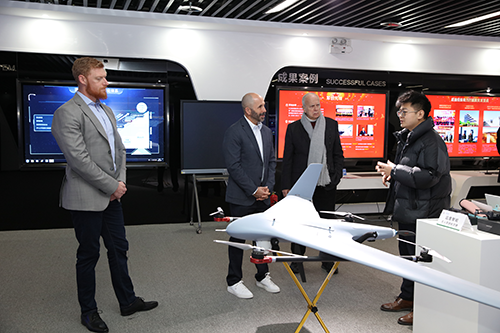
Prior to the symposium, the delegation visited the TusHoldings Digital Showroom at Tsinghua Science Park to systematically understand the group’s business ecosystem, global network, and incubation achievements in AI and the low-altitude economy. The visit concluded with a working dinner held in a friendly atmosphere to further deepen the exchange.




Scan QR Code
Shared a Link


New Media


