


- Press Center

Embassy of the Republic of Indonesia in London Visits TusPark CambridgePrint
Post Time:2026-01-28来源:TusHoldings
Recently, a delegation from the Embassy of the Republic of Indonesia in London, led by Ambassador Dr. Desra Percaya, visited TusPark Cambridge. They held a symposium with the TusPark UK team and Cambridge Science Park to discuss core topics including scientific research innovation, ecosystem building, and the commercialization of research findings.
As a member of the TusPark European Innovation Academy (TEIA), the Embassy of the Republic of Indonesia in London has long participated in and supported the construction of the Eurasia innovation cooperation mechanism. This exchange was conducted via the TEIA platform, fostering synergy and optimization between the UK and Indonesia in research innovation and technology transfer, thereby injecting new momentum into bilateral cooperation.
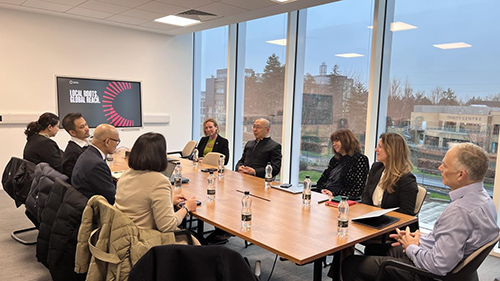
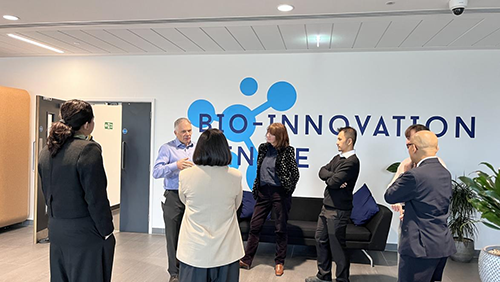
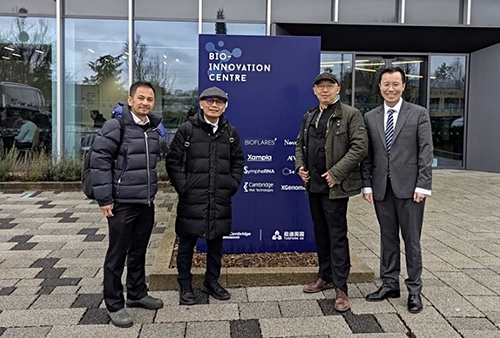
The delegation visited the Bio-Innovation Centre (BIC), a facility co-developed by TusHoldings and Trinity College, University of Cambridge. As one of the first open biotechnology incubators in the UK, the BIC provides flexible R&D space for early-stage life science enterprises through shared infrastructure and a "bench rental" model. This allows companies to start with a single lab bench and expand as their business grows, enabling seamless R&D progression within the same building.
During the visit, Lin Zhuocun, President of TusPark UK, and Jane Hutchins, Managing Director of Cambridge Science Park, introduced the experience of building a localized innovation ecosystem and shared insights on the differences between ecosystem models in the UK and Asia. Lin Zhuocun remarked: "Our parks do more than provide space and leasing; more importantly, we understand the needs of our tenants and help them secure funding, resources, and growth opportunities. Our relationship with resident enterprises is not just that of landlord and tenant, but of deep partnership—identifying growth potential by closely linking research with the industrial innovation ecosystem."
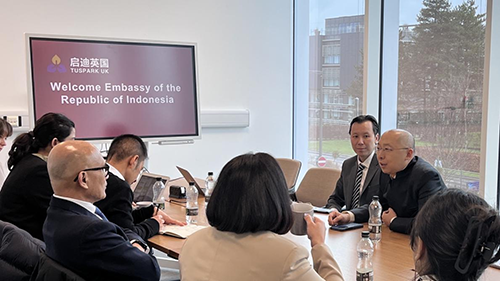
Jane Hutchins echoed this sentiment: "The core of building an innovation cluster lies not only in original knowledge and elite talent but also in effective communication mechanisms." She added: "TusPark UK’s Bio-Innovation Centre (BIC) is an excellent example. Its architecture breaks down communication barriers and brings companies together through networks and incubators to create more opportunities. Here, we don't just provide space; we deeply understand corporate needs and provide targeted resources and business strategies, serving as a genuine platform for growth rather than relying solely on direct subsidies."
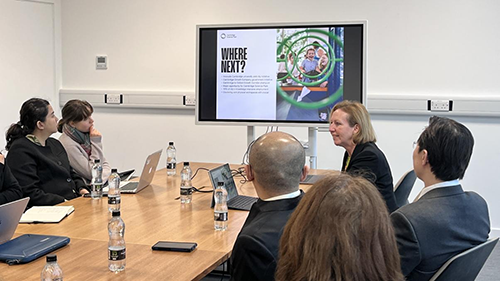
Following the discussions, two companies based in the BIC demonstrated the results of this incubation model. Xampla, a University of Cambridge spin-off and one of the incubator's earliest members, introduced its high-performance plastic-free materials developed from natural plant proteins, offering a fully biodegradable and compostable alternative to single-use plastics. The company shared its journey from early incubation to its recent $14 million Series A funding, illustrating a successful path from research to industrialization and commercial expansion. Novogene then presented its global next-generation sequencing services, international academic and industrial cooperation networks, and the significant role it plays in the European life sciences ecosystem through its base at TusPark Cambridge.
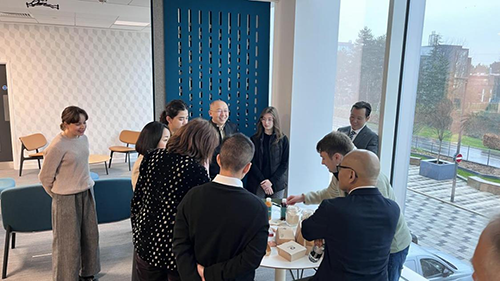
Concluding the visit, Colin Tan, Vice Dean of the TusPark European Innovation Academy (TEIA), outlined priority directions for deepening future cooperation with Indonesia. He stated that TEIA could provide support in formulating Indonesia’s science and innovation strategies, science park construction, and technology transfer, leveraging best practices from both the UK and China. Furthermore, TEIA will facilitate the integration of Indonesian universities into the University of Cambridge’s innovation network through platforms like Innovate Cambridge, fostering cooperation in biotechnology, renewable energy, and AI to support international technology development and science diplomacy.
This exchange underscores the shared commitment to advancing long-term research cooperation and innovation ecosystems between the UK and Indonesia. TusPark UK and its partners look forward to driving deeper collaboration through continuous dialogue, specialized industry projects, and multilateral initiatives connecting the innovation ecosystems of the UK, China, Indonesia, and the broader Asia-Pacific region.




Scan QR Code
Shared a Link


New Media


