


- Press Center

TusHoldings Hosts Brazilian Higher Education Delegation to Explore New Opportunities in China-Brazil Science & Technology Innovation CooperationPrint
Post Time:2026-04-22来源:TusHoldings
On April 21, a delegation of Brazilian private universities, organized by the Brazilian Association of Maintenance Institutions of Higher Education (SEMESP), visited TusHoldings. TusHoldings Chairman Wang Jiwu, Chief Operating Officer Wang Shugui, Executive President Sai Fulin, and Vice President Yang Ming attended the reception and held a roundtable discussion with the delegation in the Sunshine Hall at TusPark. The discussion focused on higher education cooperation, technological innovation, park development, and international exchange, exploring new pathways for China-Brazil science and technology cooperation.
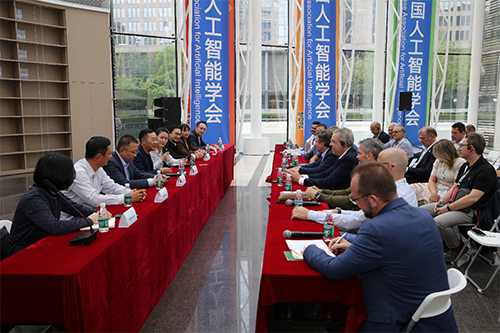
Chairman Wang warmly welcomed the Brazilian guests and highlighted that TusHoldings has established over 300 technology and innovation nodes worldwide. He emphasized the longstanding exchanges with Brazilian universities and personal visits to Rio de Janeiro and São Paulo, fostering deep friendships across Brazilian society. In light of the deepening China-Brazil comprehensive strategic partnership and opportunities arising from BRICS cooperation mechanisms, TusHoldings is keen to deepen collaboration with Brazilian counterparts in education, technology, and investment.
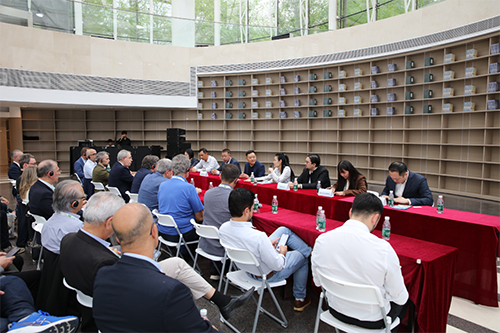
Given that the visiting delegation was organized jointly by industry associations and multiple universities, Chairman Wang proposed three cooperation models:
1. **Joint University Technology Park Model** – The association would lead multiple Brazilian private universities to jointly establish inter-university technology parks with TusHoldings.
2. **Association-Led Industrial Park and BRICS Technology Park Model** – Drawing on TusHoldings’ cooperation experience with the Swiss National Innovation Park and the Catalonia Technology Park Association, SEMESP would integrate national resources to build a technology innovation center with national influence and connect with BRICS New Development Bank and other financial institutions for long-term funding.
3. **Global Network Empowerment Model** – Leveraging TusHoldings’ global park network, Brazilian universities and enterprises can connect with Chinese and global innovation resources to enable cross-university and cross-border talent development and project incubation.
COO Wang Shugui shared TusHoldings’ layout in technology commercialization, venture investment, and global university partnerships, noting collaborations with over 200 universities worldwide and the establishment of multiple venture funds to support student entrepreneurship and technology transfer. Executive President Sai Fulin introduced the "Two Countries, Two Parks" cooperation model, which has been successfully implemented in several overseas parks, facilitating bilateral business establishment, resource sharing, policy reciprocity, and joint talent cultivation. Vice President Yang Ming shared interactions with BRICS Bank advisors, emphasizing TusHoldings’ role in bridging international business and financial mechanisms to promote China-Brazil science and technology innovation cooperation.
The SEMESP Vice President highlighted that the association represents over 1,000 private universities with more than 4 million students nationwide and expressed willingness to act as a communication bridge to facilitate project implementation. Delegation members, including representatives from the Student Loan Foundation (FUNDACRED), expressed readiness to collaborate on venture capital and startup incubation. Brazilian representatives also introduced the country’s largest undergraduate science competition, proposing joint events with TusHoldings to select startups and scientific achievements for industrial park pipelines.
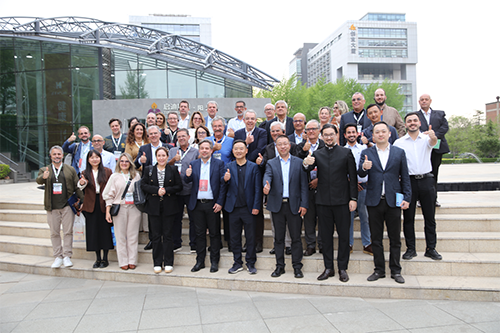
Following extensive discussions, both sides agreed to establish a regular communication mechanism. SEMESP appointed an innovation director as liaison to draft a formal cooperation letter with TusHoldings regarding joint technology parks, association-led industrial parks, and the "Two Countries, Two Parks" model. Prior to the roundtable, the delegation visited the TusStar Incubator and TusHoldings exhibition hall to understand the global innovation network, incubation services, and technology commercialization practices. This visit further solidified the foundation for China-Brazil cooperation in higher education and technology innovation, with future collaboration focusing on joint park construction, talent development, venture investment, and BRICS financial cooperation to strengthen the comprehensive strategic partnership and promote science and cultural exchange between the two nations.




Scan QR Code
Shared a Link


New Media


